

A Comprehensive Guide to the Different Types of Mutual Funds
A diverse investment portfolio represented as a tree, showing the different Types of mutual funds like equity, debt, and hybrid funds growing from a single seed of capital.
Entering the world of investing can be daunting, but mutual funds offer a fantastic gateway. They pool money from numerous investors to create a diversified portfolio managed by professionals. But with hundreds of options, how do you choose? The key is understanding the primary types of mutual funds available. This guide will break down the major categories to help you build a robust investment portfolio.
1. Equity Mutual Funds: For Long-Term Capital Appreciation

Equity mutual funds primarily invest in stocks and shares of companies. They are known for high return potential, but they also come with higher risk exposure due to stock market volatility. They are ideal for long-term financial goals like retirement planning or wealth creation.
-
Large-Cap Funds: Invest in well-established, financially sound companies (large market capitalization). They offer stability and steady growth.
-
Mid-Cap Funds & Small-Cap Funds: Invest in medium-sized and smaller companies, respectively. They have higher growth potential but are also riskier.
-
Sector Funds/Thematic Funds: Concentrate on a specific sector (e.g., technology, healthcare) or theme (e.g., ESG investing, infrastructure). They offer targeted exposure but lack diversification.
- ELSS (Equity Linked Savings Scheme): These are tax-saving mutual funds with a statutory lock-in period of 3 years and offer a deduction under Section 80C of the Income Tax Act.
2. Debt Mutual Funds: For Stable and Regular Income
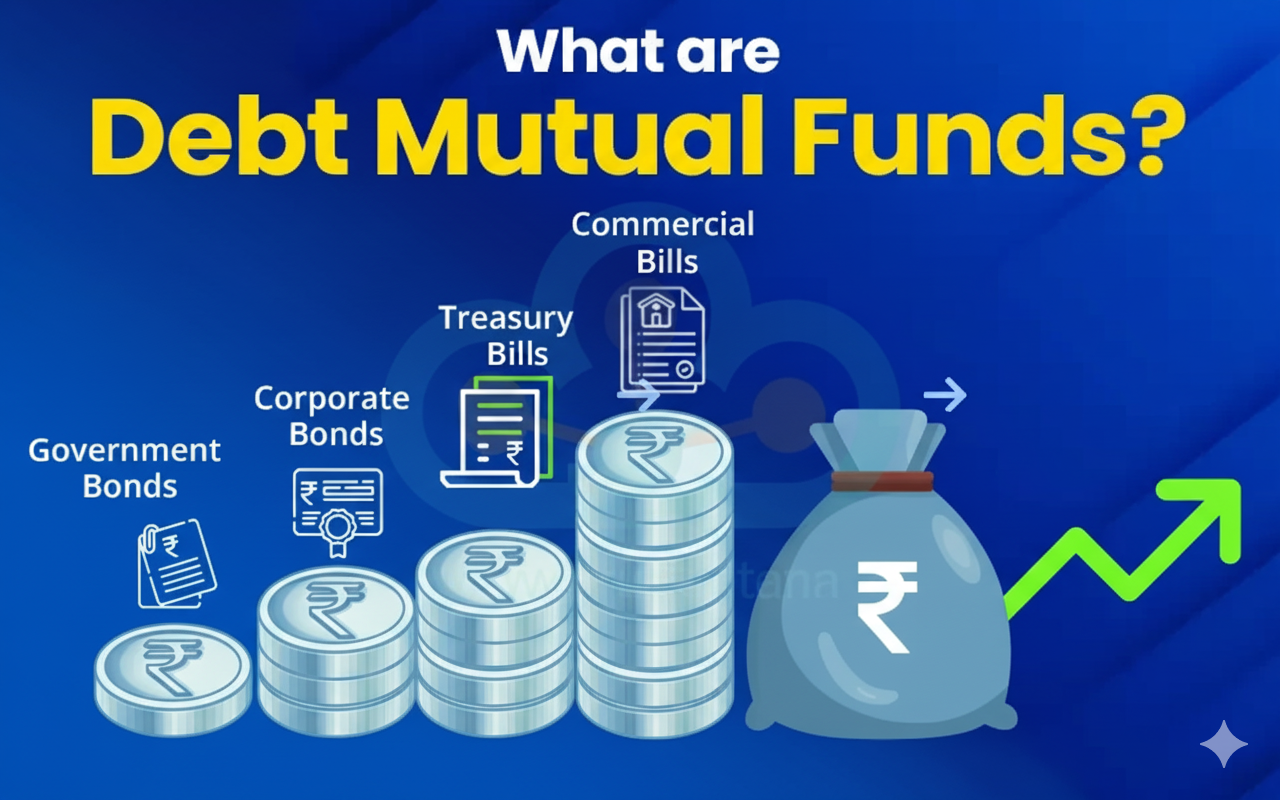
Debt mutual funds invest in fixed-income instruments like government bonds, corporate bonds, and treasury bills. They are generally less volatile than equity funds and are suitable for investors with a low risk appetite seeking regular income and capital preservation.
-
Liquid Funds: Ideal for parking surplus cash for a few days to months. They offer high liquidity and slightly better returns than a savings account.
-
Gilt Funds: Invest solely in government securities, which are considered virtually risk-free from default.
-
Corporate Bond Funds: Focus on bonds issued by companies, offering higher interest rates than government bonds but with slightly higher credit risk.
3. Hybrid Mutual Funds: The Best of Both Worlds

As the name suggests, hybrid mutual funds invest in a mix of both equity and debt instruments. This blend helps in risk management by balancing the growth of equity with the stability of debt. They are a great tool for asset allocation and portfolio diversification.
-
Aggressive Hybrid Funds: Have a higher allocation to equities (e.g., 65-80%) and are geared towards growth.
-
Conservative Hybrid Funds: Have a higher allocation to debt instruments (e.g., 75-90%) and are focused on income.
-
Balanced Advantage Funds (BAFs): Dynamically manage their allocation between equity and debt based on market valuations.
4. Solution-Oriented and Other Fund Schemes
These mutual fund schemes are designed for specific long-term goals.
-
Retirement Funds: Help you build a corpus for your post-retirement life. They typically have a lock-in period of 5 years or until retirement age.
-
Children’s Education Funds: Aim to meet the rising cost of a child’s higher education.
-
Index Funds & ETFs (Exchange-Traded Funds): Passively managed funds that replicate a market index like the Nifty 50 or Sensex. They have low expense ratios and are a great, low-cost way to invest.
-
Fund of Funds (FoFs): These are mutual funds that invest in other mutual funds, providing instant diversification across fund houses and strategies.
How to Choose the Right Fund for You?
Selecting the right type of fund depends on three key factors:
-
Your Financial Goals: Are you saving for a down payment (short-term), your child’s education (medium-term), or retirement (long-term)?
-
Your Investment Horizon: Equity funds need a long-term horizon (5+ years) to weather market cycles, while debt funds can be for short to medium terms.
-
Your Risk Tolerance: Be honest about how much market volatility you can comfortably handle.
Disclaimer: Mutual fund investments are subject to market risks. Please read all scheme-related documents carefully before investing. Past performance is not indicative of future returns.