
 In
In
the journey toward financial freedom, choosing the right vehicle is half the battle. With a plethora of investment options available, from the traditional to the modern, it’s easy to feel overwhelmed. A question we often hear from our clients is: “Are mutual funds still a good choice, or should I be looking elsewhere?”
The truth is, there’s no one-size-fits-all answer. The best investment for you depends on your risk tolerance, time horizon, and investment goals. Let’s break down how mutual funds stack up against other popular investment strategies.
Mutual Funds: The Professional’s Pick for Diversification
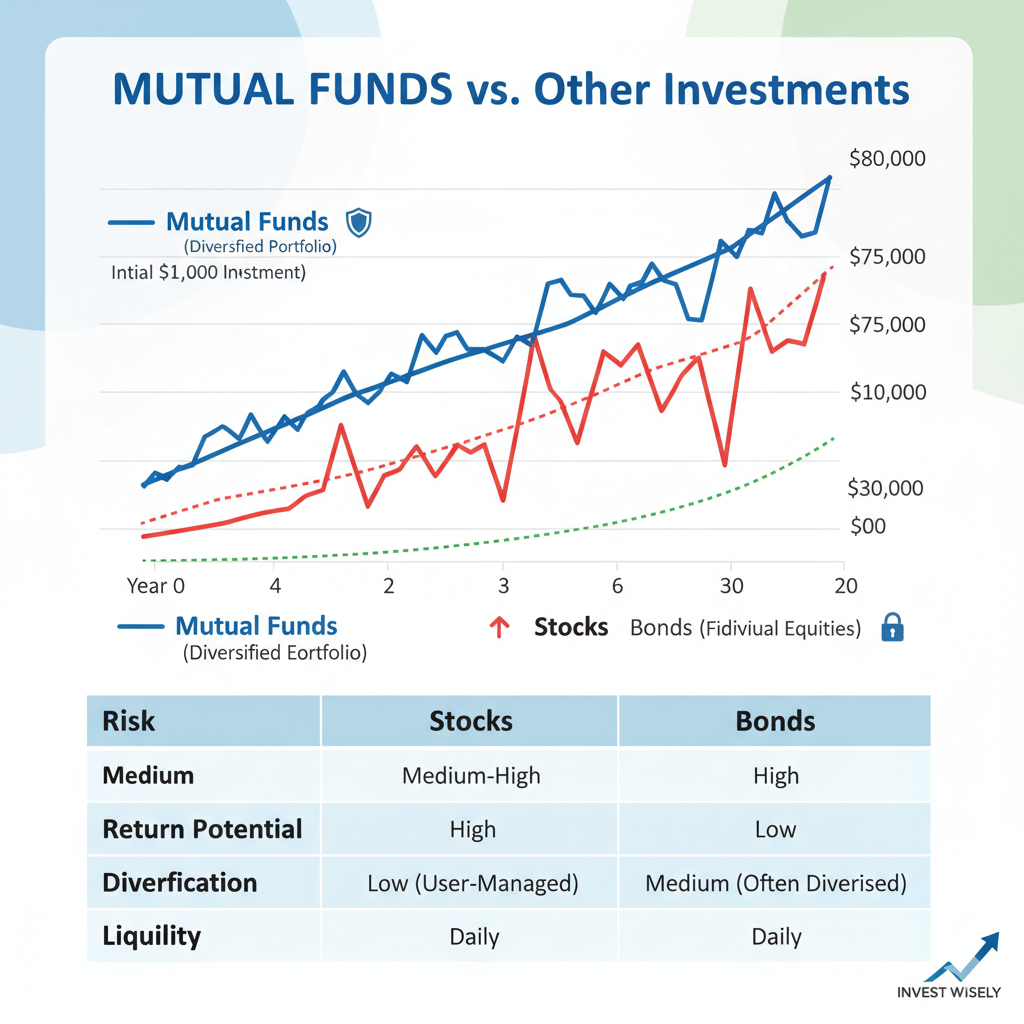
A mutual fund pools money from many investors to buy a diversified portfolio of stocks, bonds, or other securities. This is managed by a professional fund manager.
The Advantages:
-
Instant Diversification: With a single transaction, you own a small piece of hundreds of companies, significantly reducing your risk compared to buying individual stocks.
-
Professional Management: A dedicated financial advisor or fund manager makes the daily buy/sell decisions, which is ideal for investors who lack the time or expertise.
-
Accessibility & SIPs: You can start with a relatively small amount and benefit from Systematic Investment Plans (SIPs) to build discipline.
The Considerations:
-
Fees: Actively managed funds come with expense ratios that can eat into returns over time.
-
Less Control: You cannot choose the individual securities within the fund.
How Do Mutual Funds Compare?
1. Mutual Funds vs. ETFs (Exchange-Traded Funds)
This is the most common comparison. ETFs also offer diversification but trade like stocks on an exchange.
-
Trading: Mutual funds are priced once at the end of the day. ETFs trade throughout the day at fluctuating prices.
-
Cost: ETFs are typically more cost-effective with lower expense ratios, making them a favorite for passive investing.
-
Minimum Investment: ETFs require you to buy at least one share, while mutual funds often have a minimum dollar amount.
The Verdict: ETFs often win on cost and tax efficiency for hands-off investors. Mutual funds shine for those who prefer active management and automated investing via SIPs.
2. Mutual Funds vs. Individual Stocks
Buying individual stocks means direct ownership in specific companies.
-
Risk & Diversification: A single stock is inherently riskier than a diversified mutual fund portfolio. Your returns are tied to the performance of one company.
-
Potential & Control: Individual stocks offer higher growth potential (and loss potential) and give you complete control over your investment choices.
-
Time & Expertise: Success in stock picking requires significant research, time, and expertise.
The Verdict: Individual stocks are for the active, knowledgeable investor. Mutual funds are the cornerstone for those seeking a hands-off, diversified approach to wealth creation.
3. Mutual Funds vs. Real Estate
Real estate is a tangible asset class known for generating passive income and hedging against inflation.
-
Liquidity: Mutual funds are highly liquid; you can sell your units any business day. Real estate is illiquid, with sales taking months.
-
Capital Required: Direct real estate investment requires substantial capital for a down payment, unlike the lower entry point of mutual funds.
-
Management: Being a landlord is a part-time job. Mutual funds are managed for you.
The Verdict: Real estate can be a powerful diversifier but demands active involvement. Mutual funds offer a liquid and hassle-free path to participating in the growth of the economy.
Building a Balanced Investment Portfolio
The key to successful investment management isn’t about picking one winner. It’s about asset allocation. A well-structured investment portfolio often includes a mix of these assets:
-
Core Holding: Use low-cost index funds or broad mutual funds as the foundation of your portfolio for steady growth.
-
Satellite Holdings: Allocate a smaller portion to individual stocks or sector-specific ETFs for higher growth potential.
-
Diversification: Consider real estate investment trusts (REITs), which are like mutual funds for real estate, to add property exposure without the hassle.
The Bottom Line: It’s About Your Financial Journey
There is no “best” investment, only the best combination for you.
-
For the novice investor or someone seeking a hands-off approach, mutual funds provide a safe, professionally managed launchpad.
-
For the cost-conscious, passive investor, ETFs are an excellent tool.
-
For the engaged and experienced individual, a mix of funds and hand-picked stocks can be rewarding.
Consulting with a qualified financial advisor is the most crucial step you can take. They can help you assess your risk profile, define your goals, and build a diversified portfolio that may include mutual funds alongside other instruments to help you navigate the path to your financial goals.
Disclaimer: This blog post is for informational purposes only and does not constitute financial advice. Please consult with a certified financial planner or advisor before making any investment decisions.